Parallel Meeting to WEF
proceeding report (ar)
meeting agenda
list of participants
final declaration (ar)
final declaration (en)
Arab Business Council (ABC)
WEF and ABC (ar)
global competitiveness report
code of principles
list of participants
private sector perspective
asian business council declar
foreign investment criteria
intellectual property rights
judical systems in arab world
jordan pan arab investment
private sector role in education
r&d between industry & academia
economic reform blueprint
wef program 2005
ABC marakech exec summary


ANND Affiliations
Eye On
ANND Programs


Regional Meeting

Parallel to the World Economic Forum

14 th -15 th May 2004

About the Meeting

Introduction:

Annually, since 1973, the World Economic Forum has been gathering in Davos, and bringing together representatives from the private and the public sectors from around the world to debate the global economic agenda. Within the annual process of the WEF, regional economic summits and extraordinary annual meetings are convened, such as the European Economic Summit, the East Asian and the African Economic Summits, as well as the WEF in Jordan. Accordingly, the annual meeting in Jordan tackles the regional economic issues and the situation of the Arab countries within the global economic agenda.

Starting in 1998, civil society representatives from around the world were gathering every year in a meeting anti the Davos World Economic Forum. In 2000, these anti-Davos groups called for organizing the World Social Forum (WSF) in Porto Alegre, where the perspective of the global social movement on the issues tackled by the WEF was presented. The CSOs participating annually at the WSF and the anti-Davos events aim at creating a space for socially and environmentally sustainable alternatives to the corporate globalization agenda.

WEF in the Arab Region:

In 2004, the Arab Region will be hosting the annual WEF in Jordan, between the 15 th and 17 th May 2004. The meeting will be gathering business, political, and other regional leaders, in a process focused on implementing regional policy reform. The participants will discuss the position of the Arab countries in the global economy, while setting strategies for mobilizing within the global economic scene. The debates will focus on four key areas:

  • Partnering for Regional Reform
  • Defining the Business Agenda
  • Transitioning Iraq – Iraq Revisited
  • The Global Agenda: Impact on the Region

The regional economic forum prepared had produced the Arab Competitiveness Report 2002-2003, which contains assessments of the conditions, structures, and policies that are integral to the Region’s competitiveness in the global economy. The Report covers sixteen Arab countries: Algeria, Bahrain, Egypt, Jordan, Kuwait, Lebanon, Libya, Mauritania, Morocco, Oman, Qatar, Saudi Arabia, Syrian Arab Republic, Tunisia, United Arab Emirates, and Yemen. Also, the WEF’s Arab Business Council (ABC), a group of senior business leaders from the Middle East, has been active on regional economic prospects. The ABC met in Davos in January 2004 to ratify a new blueprint for economic reforms across the 22 Arab countries. The new ABC document focuses on three vital areas of the economy;

  • Economic liberalization and reforms
  • Governance
  • Human resource development.

It is worth mentioning that the ABC will be meeting with the New Asian Leaders’ (NAL) Community where common plans will be discussed for the regional and global economic agenda.

Thus, it is essential that Arab CSOs keep an eye on the workings and proceedings of the upcoming meeting in Jordan as it will be tackling core issues of regional and global economic integration, which is defining the processes of economic, and to a large extent political and social development.

Suggested objectives of the Meeting:

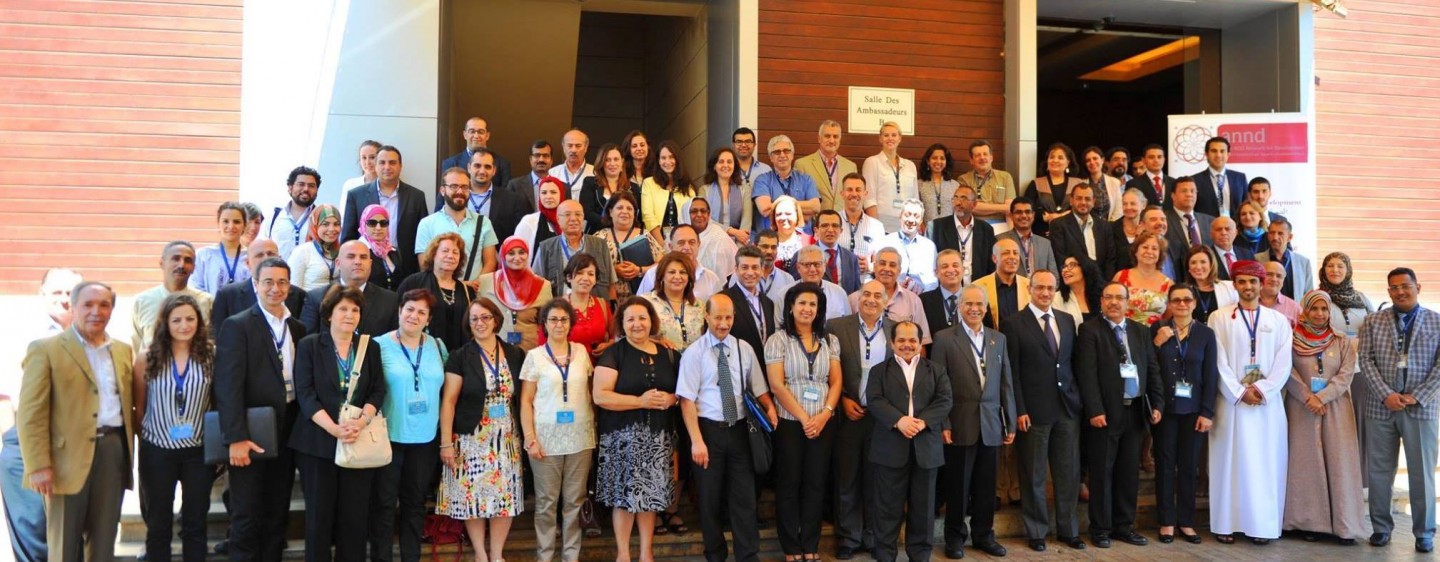
The regional meeting in parallel to the WEF will gather regional CSOs in parallel to the gathering of the WEF in Jordan, where they will monitor and discuss the issues included in the agenda of the WEF. The event aims at:

  • Following-up on the agenda of the WEF regional meeting and providing a critical input on the workings of the WEF and the corporate actors.
  • Initiating an assessment of the impact of regional and global partnerships and trade agreements on the Arab region from the perspective of Arab CSOs.
Discussing the role of Arab CSOs regarding regional and global partnerships, and means of enhancing cooperation with the government and private sector.