From the Devastation of War to the Breakdown of Public Administration: How Were Lebanon’s State Institutions Depleted?
From the Devastation of War to the Breakdown of Public Administration: How Were Lebanon’s State Institutions Depleted?
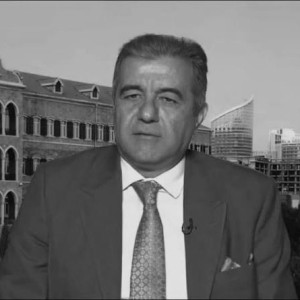
By Dr. Anis Bou Diab
Economist and Member of the Bureau of the Economic, Social and Environmental Council of Lebanon
There is no dispute that the Lebanese Civil War of 1975–1990 caused enormous destruction to state institutions and public administration, and inflicted severe damage on the health, education, electricity, water, and telecommunications sectors. Parts of the public administration disintegrated, its capacity to deliver services declined, and infrastructure was subjected to destruction and neglect. Yet more than three decades after the end of the war, a fundamental question remains: Why has the state failed to restore its institutions, and why has it been unable to rebuild a modern and effective public administration despite the resources spent on reconstruction?
This is where the real problem lies. The war explains part of the collapse of institutions, but it does not, on its own, explain their continued deterioration after the end of hostilities. The Taif Agreement was supposed to mark the beginning of a new phase in which the state would be rebuilt on more balanced and equitable foundations, and the popular demands that preceded the war—calling for reform of the political system and broader political participation—would become an opportunity to develop institutions and strengthen their capacity to serve citizens. Here, the political forces that participated in the civil war made a mistake when they treated public institutions as the property of those in power rather than as public assets belonging to citizens. What happened, however, was that the expansion of participation in power was not accompanied, to the necessary extent, by the establishment of a public administration independent of political rivalries or by the consolidation of standards of competence and accountability.
From Political Participation to the Division of Public Administration
The problem was not the principle of political participation itself, nor the pursuit of balance among the different components of Lebanese society, but rather the way this principle was employed in the management of the state. Instead of participation serving as an entry point for strengthening institutions, political and sectarian quota-sharing became, across broad areas of political practice, a mechanism for distributing administrative positions, jobs, and benefits among influential forces and those possessing greater power.
As a result, considerations of political loyalty, sectarian affiliation, and personal connections began, in many cases, to take precedence over competence, experience, and merit. Recruitment in some public institutions came to be used to satisfy the demands of political forces and their supporters rather than the actual needs of the administration. Public employment was no longer always treated as a responsibility requiring qualifications, productivity, and accountability; at times, it became a means of reinforcing influence and consolidating loyalties.
In its studies on Lebanon, the World Bank has pointed out that the subordination of public-sector recruitment to political and sectarian considerations, weak accountability, and the capture of public resources by private interests have contributed to the deterioration of essential services. Reports on the electricity sector have also documented how political interference and imbalances of power have affected appointments, contracts, and administrative decisions at the expense of effectiveness and the public interest.
Public Institutions: Serving Citizens or Distributing Benefits?
The danger of this process is that it does not merely weaken public administration; it changes its fundamental purpose. A public institution that is supposed to operate according to clear objectives, performance indicators, and budgets subject to oversight becomes vulnerable to being transformed into a resource for distributing jobs, contracts, and privileges.
This helps explain some of the waste and corruption that accompanied the management of certain public sectors after the Taif Agreement. In the electricity sector, stalled reforms and accumulated financial and administrative imbalances led to continued reliance on private generators, imposing additional burdens on households and economic enterprises. In the water sector, citizens’ access to regular services deteriorated, increasing the need for costly private alternatives. In health and education, inadequate funding and management, together with the declining purchasing power of public-sector employees, placed additional pressure on institutions and services, not to mention the deterioration of educational standards in public schools and the Lebanese University.
This does not mean that all public institutions have failed to the same extent or that every public employee is part of a system of corruption. There are civil servants, academics, doctors, teachers, and administrators who have maintained their professional commitment despite difficult circumstances. The problem, however, lies in a system of incentives, management, and oversight that may marginalize qualified individuals, discourage initiative, and make institutional performance dependent on political balances rather than citizens’ needs.
More seriously, the deterioration of public services creates space for private alternatives for which citizens pay twice: once through the taxes and fees that finance the state, and again through what they must spend to secure electricity, water, healthcare, education, and other services that effective public institutions are supposed to guarantee. In this way, state weakness becomes an additional economic and social burden, deepening inequalities between those who can afford private alternatives and those who cannot.
Waste Is Not Just Money Lost
Waste is often reduced to money spent without achieving results, an opaque transaction, or recruitment that is not justified by actual needs. Yet the most dangerous form of waste is that which undermines the state’s very capacity to function: the waste of expertise, the waste of time, the obstruction of decisions, the weakening of planning, and the erosion of citizens’ trust in institutions.
When administrative effectiveness declines, the cost of services rises, productivity falls, the economy’s competitiveness suffers, and individuals and institutions become increasingly dependent on private solutions. Public employment also loses some of its professional appeal, while the emigration of skilled workers becomes another consequence of this process. Thus, corruption ceases to be merely an ethical or administrative problem and becomes a factor that obstructs growth, deepens the fiscal deficit, and undermines social justice.
In its 2022 report on Lebanon’s public finances, the World Bank concluded that the management of public resources during the post-war period contributed to entrenching an economic model that depleted state resources and weakened the delivery of essential services. This reinforces the need to view the crisis as one rooted in the way the state has been managed, rather than merely as a shortage of funds or an inevitable consequence of war.
How Can the State Be Restored?
Restoring public institutions does not begin with increasing spending alone, nor with replacing individuals without changing the rules governing their work. It requires comprehensive administrative and institutional reform based on five fundamental pillars:
First, adopting competence, merit, and transparency in recruitment and appointments, and activating the roles of the Civil Service Board, the Central Inspection Authority, and oversight bodies, away from political interference.
Second, strengthening the autonomy of public institutions in managing their operational affairs, within clear objectives, publicly disclosed budgets, and measurable indicators, while holding officials accountable for results.
Third, implementing public procurement rules and financial oversight, publishing information related to contracts, expenditures, and outcomes, and holding accountable anyone proven to have been involved in wasting public funds or abusing authority.
Fourth, restoring the importance of human resources in the public sector by ensuring decent working conditions, training employees, evaluating performance, and linking incentives to productivity, rather than allowing skilled personnel to deteriorate under the weight of low wages and political interference.
Fifth, making the public interest the guiding principle of reform, so that the state’s success is measured by improvements in the quality, regularity, cost, and equitable accessibility of services, rather than by the number of jobs distributed, the volume of spending, or the abundance of announced plans.
Conclusion: No Strong State Without Strong Institutions
Lebanon’s tragedy lies not only in the fact that the war destroyed part of the state’s institutions, but also in the failure of the post-war period to transform reconstruction into a comprehensive institution-building project. The political settlement that ended the war should have paved the way for a state capable of managing its resources, providing services, and protecting its citizens, rather than turning public administration into yet another arena for distributing influence and benefits according to a new balance of power.
Perhaps the most urgent question today is not how much money is needed to rehabilitate institutions, but how to ensure that the causes that brought them to their present condition are not repeated. Money without sound governance may turn into further waste, laws without implementation remain ink on paper, and appointments without competence cannot build an administration capable of recovery.
The state is not the property of the forces that govern it, public administration is not a prize to be divided among political parties, and public employment is not a political reward. They all belong to citizens, and their existence is justified by their ability to serve them. Restoring the state therefore begins with restoring this simple principle: public institutions exist to serve people, not for people to serve the interests of those who control them. Perhaps this is why the forces that participated in the civil war were mistaken when they considered public institutions the property of the political authority in power rather than public assets.
Recent publications
Lebanon’s Reform Moment: From Fiscal Repair to Rebuilding the State - Lamia Moubayyed