
Outcomes of Financing for Development and Social Development, and the Postponed Question of Justice - Ahmad Awad
Ahmad Awad
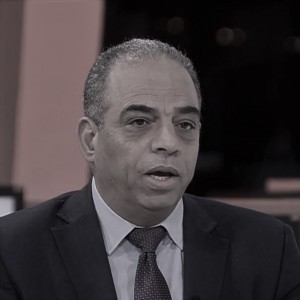
Outcomes of Financing for Development and Social
Development, and the Postponed Question of Justice - Ahmad Awad
The global economy in 2025 reflects a pivotal moment, where economic
crises intersect with political, climate, and social transformations, revealing
the limits of the economic model that has prevailed for decades. Crises are no
longer an exception but have become a permanent feature of the global economic
system, from debt crises, through the erosion of the state's social role, to
the widening gaps between the Global North and the Global South.
Within this turbulent context, fundamental questions arise about the
capacity of international paths to provide real alternatives, particularly in
light of the outcomes of the Fourth International Conference on Financing for
Development and the World Summit for Social Development.
One of the most prominent features of the global transformation is the
exacerbation of the sovereign debt crisis, where the majority of low- and
middle-income countries have become trapped in a spiral of escalating debt
service that drains their public resources and constrains their ability to
invest in basic services for their citizens. In many of these countries, the
cost of debt now exceeds combined spending on health and education, reflecting
a structural imbalance in the international financial system that cannot be
addressed through technical solutions or partial reforms.
In parallel, global economic policies are witnessing a clear retreat in
the social role of the state. Despite increasing discourse about inclusive
development and investing in people, austerity fiscal policies continue to
impose themselves as virtually the only option, often under pressure from major
international financial institutions and creditors. This trajectory has
weakened social protection systems, expanding poverty circles, and deepening
the vulnerability of the most affected groups, rather than strengthening social
protections in their various dimensions.
Within this landscape, the Fourth International Conference on Financing
for Development, held in Seville, Spain in early July 2025, came as an attempt
to address global imbalances in development financing by focusing on debt
issues, taxation, capital flows, and international partnerships. The conference
outcomes carried explicit recognition of the scale of the crisis facing Global
South countries and the need to reform the international financial system.
However, this recognition was not translated into binding commitments or fair
mechanisms addressing the root causes of the problem, especially regarding debt
restructuring or limiting creditors' domination over debtor countries'
decisions.
Nevertheless, the conference provided an important space to reintroduce
issues of financial and tax justice at the international level, where
increasing demands emerged for imposing fair taxes on cross-border
corporations, limiting tax evasion, and enhancing countries' domestic
resources. However, the success of these directions remains contingent on the
international balance of power and the ability of Global South countries and
civil society to transform these demands into implementable policies, rather than
merely general recommendations.
In the same context, the Second World Summit for Social Development,
held in November 2025 in the Qatari capital Doha, revived the debate on the
social dimension of development after years of domination by narrow economic
approaches. The summit outcomes acknowledged that ignoring social justice was
one of the main reasons for exacerbating economic and political instability
worldwide, and affirmed that development cannot be reduced to growth indicators
or investment attraction, in isolation from fair wealth distribution and
ensuring human dignity.
However, the greatest challenge facing this path lies in the gap between
discourse and practice. While the summit emphasizes the centrality of social
justice, economic policies in many countries remain subject to market logic and
profitability, with clear limitations in redirecting resources toward social
protection and public services. This raises a fundamental question: Will social
development remain a moral slogan, or will it evolve into a governing framework
that redirects economic and financial policies?
Amid these transformations, global and regional civil society emerges as
a fundamental actor in linking economic paths with social justice. The role of
civil society is no longer limited to monitoring or providing services, but has
become required to contribute to the formulation of policy alternatives and to
the building of cross-border alliances, especially in Global South countries.
The outcomes of "Financing for Development" and the "Social
Development Summit" showed that civil society's presence, despite the
constraints it faces, was decisive in keeping justice and rights issues on the
international agenda.
Nevertheless, the challenges facing this role cannot be ignored, amid
increasing restrictions on civic space, funding conditions that limit
independence, and attempts to confine participation to limited and often token
advisory roles. The real challenge lies not in formal participation, but in the
ability to influence agendas and policies, and to link financing and social
development issues to peoples' economic and social rights.
Ultimately, global economic transformations during 2025 revealed a
pivotal moment where crises intersect with opportunities. The outcomes of the
Fourth International Conference on Financing for Development and the World
Summit for Social Development open a window for rethinking the foundations of
the global economic system, but this window remains conditional on the capacity
to translate political commitments into structural reforms.
Without this, economic and social justice will remain a deferred slogan,
and crises will continue to recur in more severe forms. However, if these paths
are built upon with a critical and sustained pressure, 2026 may mark the
beginning of a different trajectory that reasserts development as a right,
rather than a privilege.
Recent publications
From the Istanbul Floods to COP31: Why Must Water Be at the Heart of Climate Negotiations? - Habib Maalouf
