Jan 13, 2026
Sudan Between War and Fragmentation: The Humanitarian and Political Landscape in 2025 - Madani Abbas Madani
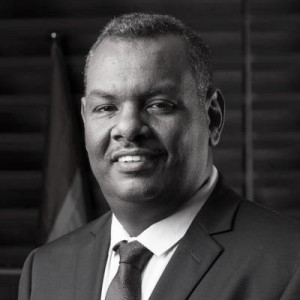
Sudan Between War and Fragmentation: The Humanitarian and Political Landscape in 2025 - Madani Abbas Madani
1. Introduction
The year 2025 witnessed a severe deterioration in all aspects of life in Sudan. With the continuation of the Sudanese war that erupted on April 15, 2023, and the ongoing military operations, shelling, and killing of civilians, humanitarian conditions worsen with each new day. The suffering of Sudanese people has also intensified due to the continuous decline in living conditions as a result of a sharp economic contraction.
This article provides a general overview of the situation in Sudan by examining the state of civic space, economic conditions, and social protection, in addition to addressing the prospects and key political challenges related to ending the war and achieving peace, while offering an approach to understanding the nature of the ongoing conflict in the country.
2. The Humanitarian Situation in Sudan
Humanitarian conditions in Sudan have continued to deteriorate, with more than 30 million Sudanese in need of humanitarian assistance, including food and healthcare. Sudan is facing the worst displacement crisis in the world: more than three million Sudanese have been forcibly displaced outside the country, while over nine million people have been displaced from their homes to safer areas within Sudan.
In conflict zones, more than two-thirds of hospitals are out of service, and many diseases and epidemics have spread. By early 2025, cholera cases since the outbreak of the war had reached approximately 50,000, in addition to the spread of dengue fever and malaria. Despite the efforts of local and international organizations, the deterioration of the health sector continues year after year, as epidemics and untreated diseases turn into weapons that claim lives with deadliness surpassing that of bullets.
As a result of the suspension of schooling and mass displacement, it is estimated that between 18 and 19 million Sudanese children have been deprived of formal education—more than 90% of school-aged children. Although the educational process has resumed in some safer areas, this occurs amid major challenges, most notably the conversion of schools into shelters and the departure of large numbers of teachers from their workplaces or from the country altogether.
3. Civic Space
The militarization of Sudan continues with the growing number of armed militias, alongside persistent restrictions on civic space and the shrinking of its margins. Complex constraints have been imposed on the work of civil society organizations and grassroots groups operating in the humanitarian field, in addition to restrictions on political and civil actors and the arrest of hundreds on charges of collaborating with one of the parties to the conflict.
There are four bodies in Sudan responsible for regulating the work of civil society organizations, all linked to de facto authorities in different areas of military control. In areas controlled by the Sudanese Armed Forces, the Humanitarian Aid Commission operates; in areas controlled by the Rapid Support Forces, a separate humanitarian aid authority exists; in South Kordofan, within areas controlled by the Sudan People’s Liberation Movement–North led by Abdelaziz al-Hilu, another body operates; and a fourth entity coordinates humanitarian work in areas controlled by Abdel Wahid Mohamed Nur’s forces in Darfur.
Despite this reality, the years of war have witnessed multiple attempts to resist restrictions on civil work and to protect human rights defenders. Many initiatives also seek to unify the voices of civil forces opposing the war. Although these efforts have not yet succeeded, they reflect the resilience of civil society and grassroots groups in Sudan.
4. Risks of Partition Amid the Continuation of War
The year 2025 saw continuous military escalation, and with the availability of regional support for the warring parties, the contours of military control on the ground changed. While the Sudanese Armed Forces managed to regain control of the capital, Khartoum, and the strategic Gezira State from the Rapid Support Forces, the latter took control of the city of El Fasher and several cities in the Kordofan region, strengthening their influence in Kordofan and Darfur, while the army maintained control over northern, eastern, and central Sudan.
Recent publications
Sep 28, 2026
What Are the Impacts of War on Energy Security? And Could It Accelerate the Energy Transition?
Sep 26, 2026