Sustainable development requires redefining progress
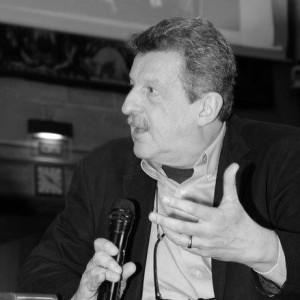
By Roberto Bissio
In this article, Roberto Bissio reflects on the need to rethink what we mean by progress in the context of sustainable development. He highlights three central issues emerging from the debates around the 2026 HLPF. First, he examines the growing international push to move beyond GDP as the dominant measure of development, arguing that economic growth alone fails to capture wellbeing, inequality and environmental sustainability. Second, he points to the financing alternatives presented by Isabel Ortiz, including wealth and windfall-profit taxes, action against illicit financial flows and debt restructuring, stressing that these choices should be debated openly at the national level. Third, he challenges the claim that there is simply “no money” for stronger social protection, drawing on Olivier De Schutter’s analysis of rising global wealth, extreme inequality and the continued scale of fossil-fuel subsidies. Together, these arguments call for a different understanding of development—one that focuses not only on how much economies grow, but on how resources are distributed, financed and translated into social and environmental progress.
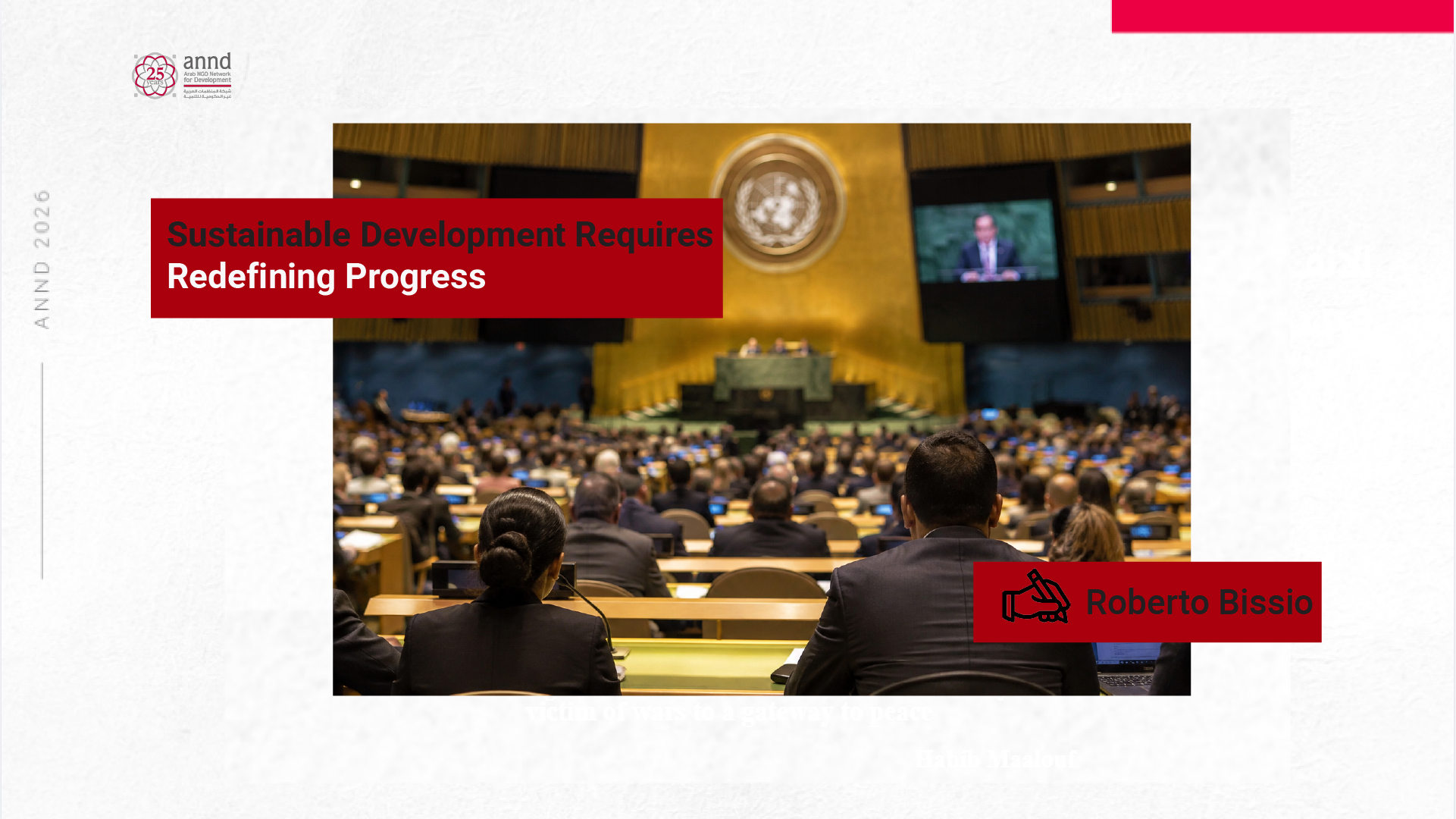
Ministers and diplomats from around the world met last July at the UN headquarters in New York to assess progress towards sustainable development and the goals set in the 2030 Agenda. In their final declaration they do not offer a rosy picture: “We recognize progress … is severely off track”, “we are falling short in tackling climate change, biodiversity loss and desertification” and, since “there can be no sustainable development without peace and no peace without sustainable development”, the ministers are “gravely concerned by the increased and ongoing conflicts in the world”.
As part of those global power struggles, the United States and some of its closest allies, like Israel and Argentina, are engaged in a power struggle against key aspects of international law and multilateral cooperation, boycotting and undermining the international courts or defunding several UN agencies and forcing dramatic cuts in the UN budget.
In reply, an overwhelming majority of the 193 UN members used to Forum as an opportunity to express their support to multilateralism and the UN charter and 36 countries submitted during the event their Voluntary National Reviews on how the objectives of sustainable development are implemented at national level.
Over 200 side-events took place during the HLPF, of which one hundred inside the UN building and the others were held in different locations around the UN headquarters or virtually. This is an impressive demonstration of commitment with the idea and principles of sustainable development, under attack by a small but very powerful handful of countries.
The sustainable development programme of the United Nations, adopted by the member states in 2015 after intense negotiations, is called “Agenda 2030” for short because many of the measurable targets included in the Sustainable Development Goals specify what exactly should be achieved by that date. But 2030 is not an expiry date, just a milestone. The current urgent need is not to define new goals and targets but to overcome the obstacles that are slowing progress or deviating from the agreed objectives.
During one of the side events of HLPF, moderated by the author of this note and including governments, academia and civil society experts among the panellists, the new wave of austerity measures was identified as one of those obstacles. As a direct consequence of the conflicts around the Gulf, oil and fertilizer prices have gone up around the well, as well as interest rates. Developing countries get more indebted and must pay more for the interests of their debt. In order to balance their accounts, austerity measures are being recommended by the IMF and the credit rating agencies and we are witnessing a wave of cuts in social security benefits and of public expenditures in education and health.
Isabel Ortiz, director of Global Social Justice, detailed nine financing alternatives already used worldwide and endorsed by international financial institutions — from wealth and windfall-profit taxes to fighting illicit financial flows and debt restructuring — insisting these choices should be made through open national dialogue, not behind closed doors.
Social Protection is clearly a mechanism to advance around the goals of eradicating poverty, reducing inequalities, promoting child and maternal health, but the usual argument to not advance in that direction is that “there is no money”. This is not true, argued Olivier De Schutter, who was UN Special Rapporteur on extreme poverty between 2020 and 2026. In the last 25 years, the average world per capita income tripled from $5,500 in 2000 to $14,400 in 2025. “But the richest 1% captured 41% of this new global wealth, versus just 1% for the poorest half”, he explained. De Schutter proposed financing universal social protection through wealth and inheritance tax reform, treating social spending as long-term investment, and steering monetary policy toward social and ecological goals. He also flagged that $423 billion/year in fossil fuel subsidies exist globally, nearly half benefiting the richest fifth of the population.
That blatant lack of correlation between the growth of GDP and advances in wellbeing or in poverty reduction is one of the reasons why per capita income is not a good indicator of social progress. And, further, GDP growth is highly correlated with a growth in carbon emissions, which makes it also inadequate as an indicator of sustainability.
An expert group appointed by the Un Secretary General recommended a dashboard with some 30 indicators, about half of them drawn from the Sustainable Development Goals; and a data and research agenda aimed at strengthening national statistical systems and developing complementary indicators over time that captured distributional and non-market dimensions of progress. An intergovernmental process on Beyond GDP was started in April, cochaired by Spain and Guyana. The need to replace GDP from its present role of being the main, and frequently only, measure of “development” was already affirmed in the Earth Summit of 1992 but faced enormous opposition. The World Bank keeps ranking countries according to income and so-called “developed” countries frequently resist indicators that measure the negative “spill overs” of their overconsumption on poorer countries.
It is said of public policies that “what cannot be counted doesn’t count”. If the governments can finally agree on measuring progress differently, the new paradigm embedded in the concept of sustainable development, will finally count.
Recent publications
What Are the Impacts of War on Energy Security? And Could It Accelerate the Energy Transition?